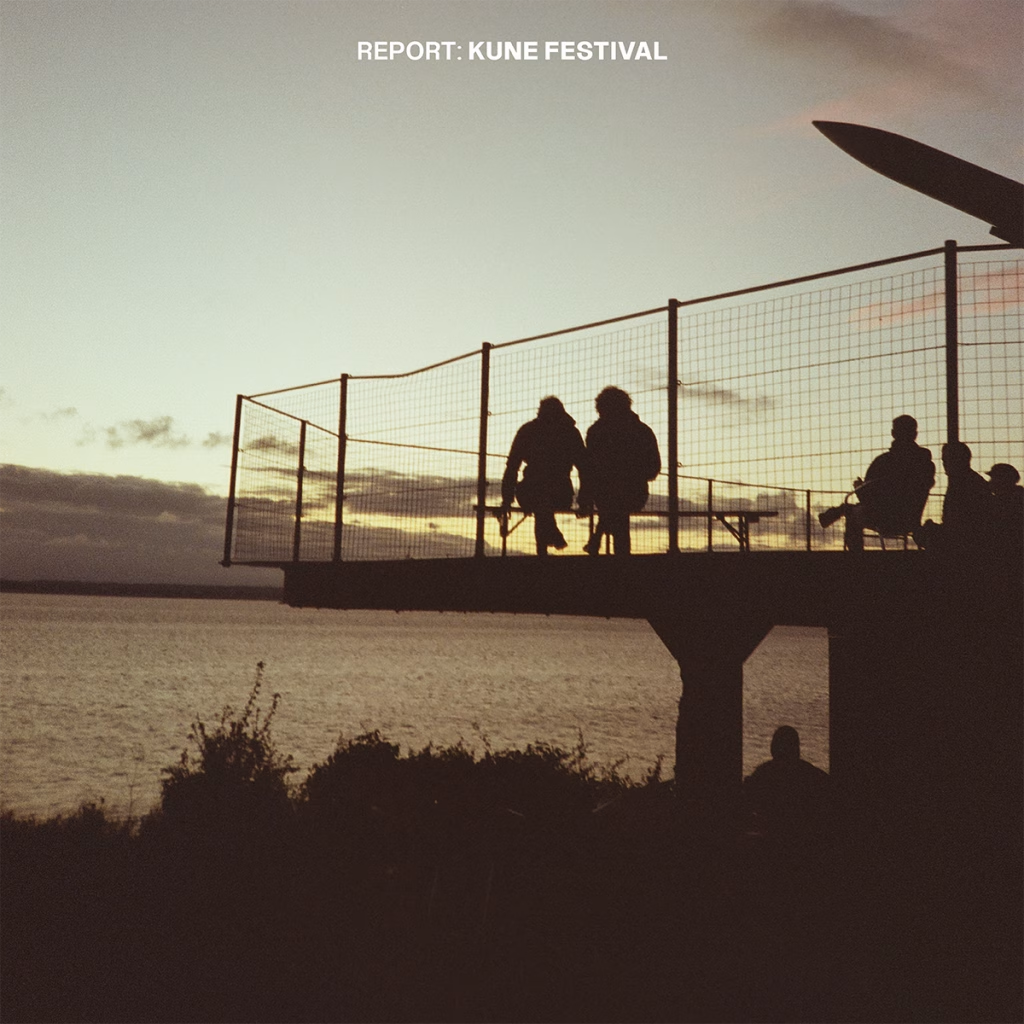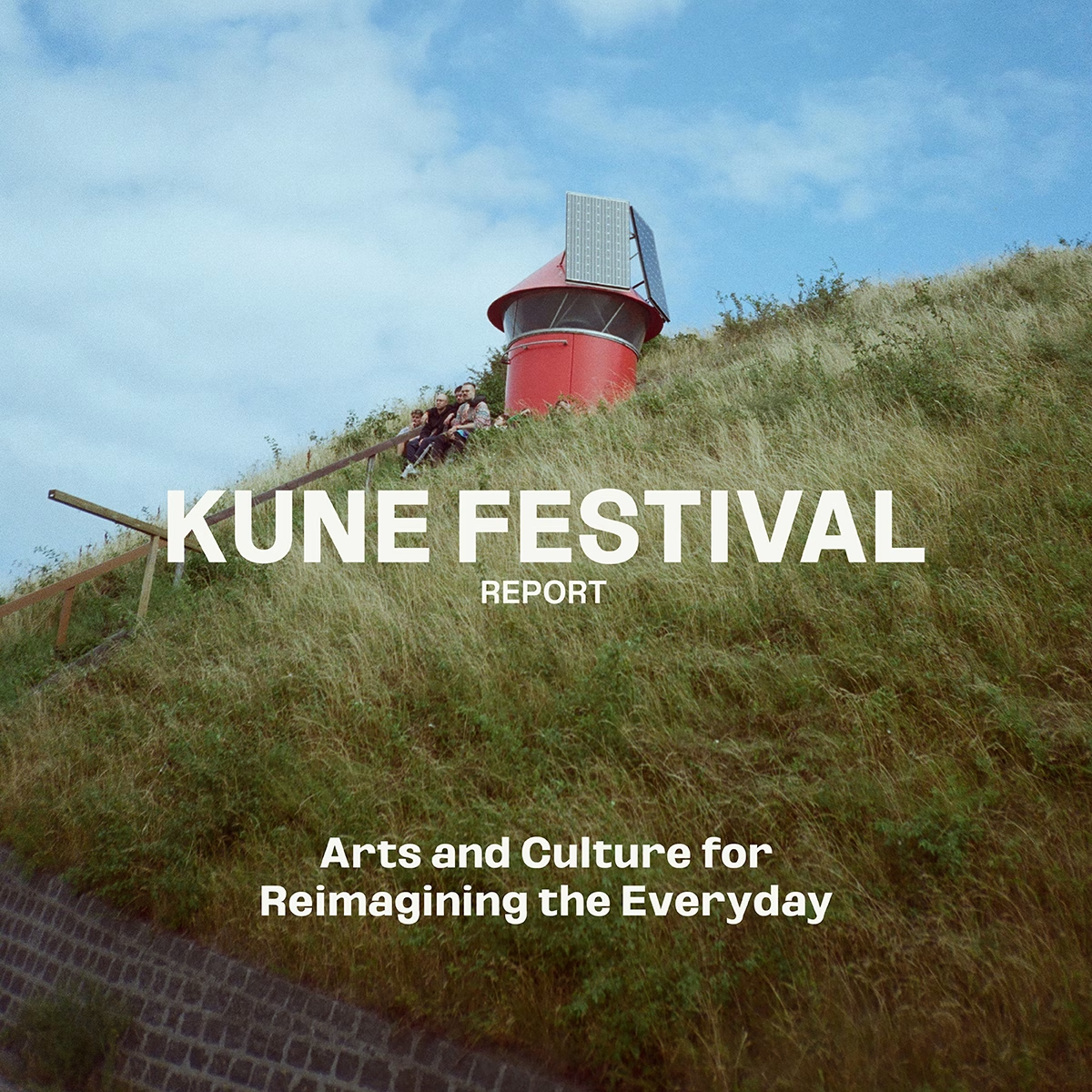
KUNE FESTIVAL is much more than a festival: it is a social and cultural laboratory that turns an island into a shared space. After a year-long pause, the 2025 edition brought back to Copenhagen an ecosystem made of music, visual arts, performances, and moments of collective reflection. 5 intense days, more than 120 artists, 1000 participants and 200 volunteers gave life to an experience that proves how culture can become a common language, a form of care, and a way to imagine new futures.
Palpebræ was there: this is our story.
KUNE is a successful practice of culture as a unifying language. It is a way to create community spaces that are built from below, for anyone willing to share the same values: openness, community, and sustainability. In these specific times, where our role as individuals to make change feels lost and we can doubt our potential to alter normative course of events, creating and protecting spaces where we can re-imagine what the future could be is absolutely vital. Art and culture have the unique power to connect people deeply, both to ourselves and to others, and festivals stand as the counterpoint to how a seemingly predetermined society could be perceived: a space where we can undo the norm of the individual dominating over the collective. Art and festivals invite us to pause, loosen up, disconnect to connect, to imagine what we can build when we step with intention and care into the perspective of the other, to recognise that the other is inevitably part of us: another reality. If imagination informs renewed realities, Art at KUNE is the medium to foster this process through the mediums of music, visual art, performance, decorative arts, a talks program, and various workshops and activities.
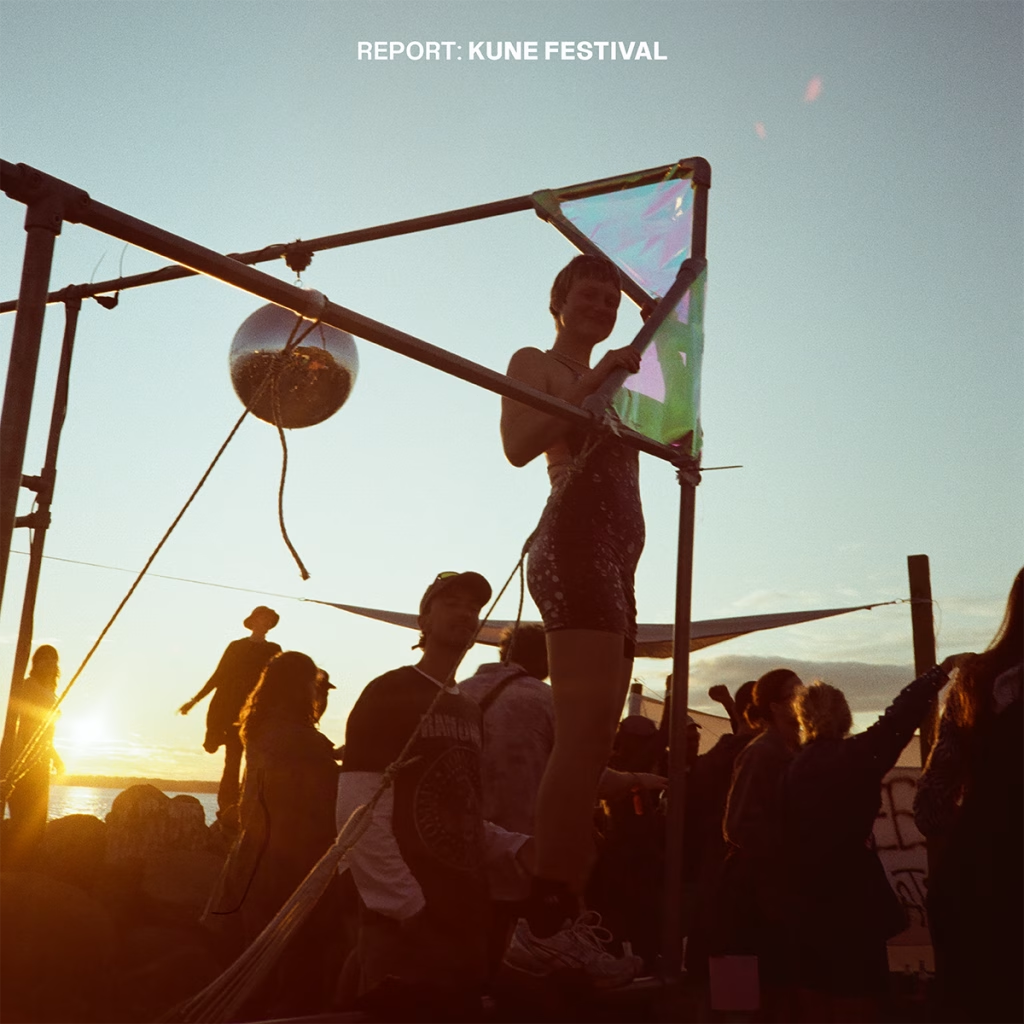
After a year-long break, KUNE returned to stay. The 2025 edition unfolded over 5 days on Copenhagen’s Ungdomsøen island, as one 1000 patrons, 200 volunteers, and over 120 artists transcended into something that felt cohesive yet diverse: a collective.
In a community-based and self-funded festival, each singular component represents something bigger. To make it function, it needs care and effort. The use of the land; artistic curation; stage and light design; visuals; and most of all, making sure that the community feels safe and aligned with shared principles, invites symbiotic and unique experiences. It is all a work of precision, one that grows only from passion.
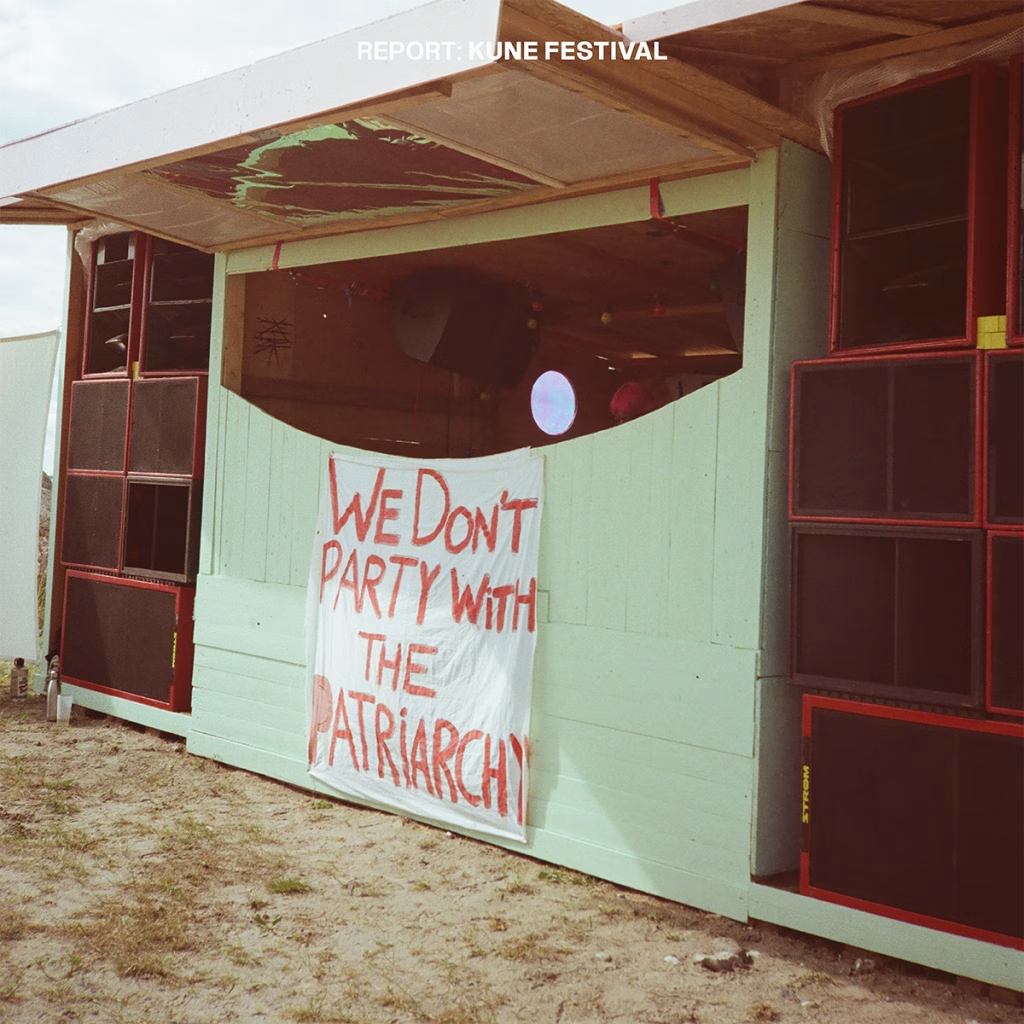
Music curation was the driving force unifying the multidisciplinary character of the festival. Martin Gilleshøj and Kasper Marott took the lead in crafting a sonic identity that perfectly matched the festival’s vision and its crowd, without compromises. The programme seamlessly blended the electronic Nordic scene and showcased niche labels and globally recognized artists known for innovation and distinctive music taste. This was possible thanks to four stages, which allowed the community to immerse themselves in different atmospheres, offering familiarity alongside sparking discoveries of new artists, genres, and modalities. This is what drives a crowd to be curious and explore music without boundaries; whatever makes you dance is right.
Showcasing collectives such as Group Therapy and FEUM, which are Nordic-based collectives offering an important active voice, proves once again the transformative power that KUNE aims to achieve in building an aware and conscious community. Alongside bringing innovation, the lineup distribution across stages also stood out. The Dutch label Omen Wapta’s showcase on the ambient stage during peak time was a clear sign of forward vision, praised by a receptive crowd. Innovation manifested not only in sound, but also in how far artists and crowds pushed the boundaries of commonly perceived peak times and set energies.
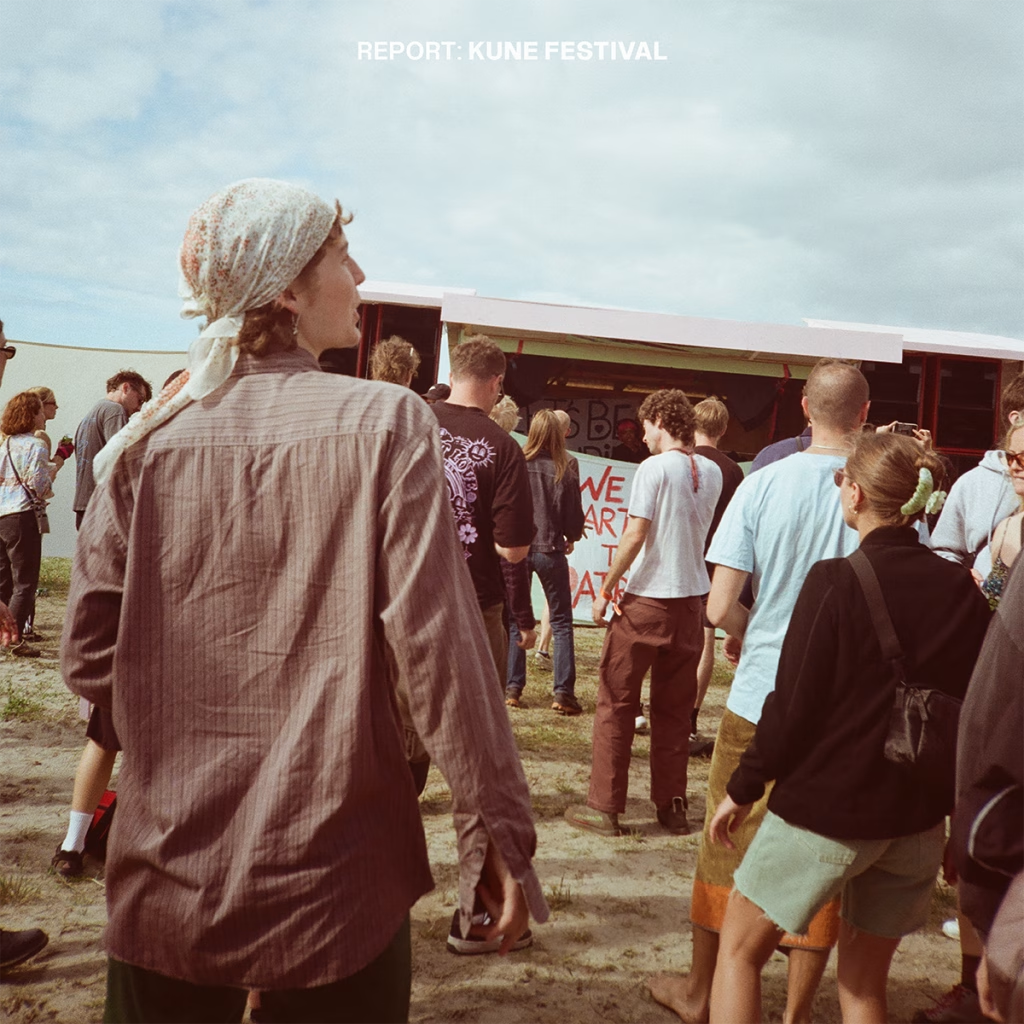
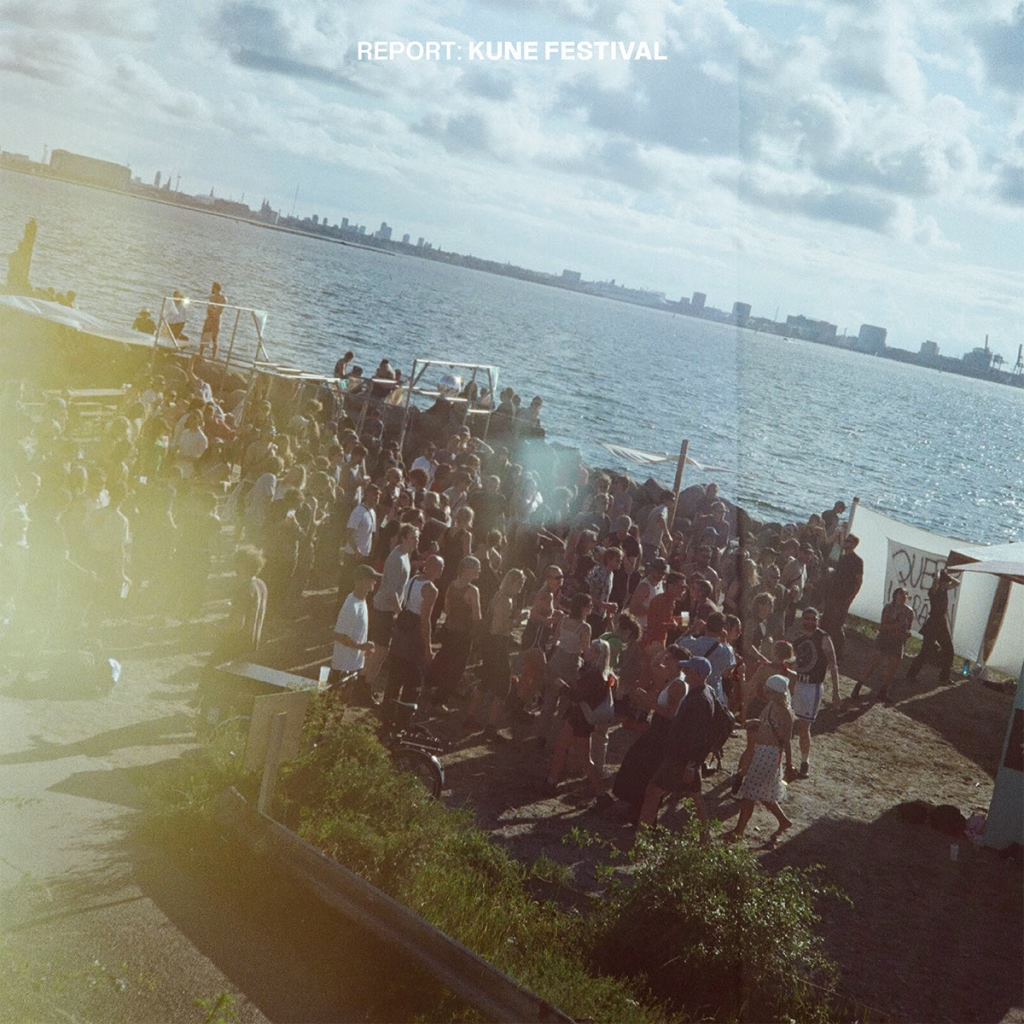
The island is the setting and the stage is the active container of the festival’s sonic narrative, shaping how people move and interact with each other, guided by the music. The island is immersed in green and surrounded by the sea, with hidden and unhidden spaces. Carved into the mountain, the site unfurls into a series of passages and tunnels that lead to four stages: Beach, Space, Vessel, and Astral. While Beach lives up to its name as the main daytime setting, Space and Vessel are open caverns with stepped levels that connect the outside to the inside, creating a natural sense of depth, almost like an amphitheater sculpted into the rock. And Astral is a decompression space where you can drift through many layers of consciousness in a darker, softer atmosphere driven by ambient sound. Visual storytelling plays an essential role alongside the music. Solo artists or collaborative performances bring a wide array of techniques, from generative graphics to video art, a true display of digital wizardry, creating a unified narrative through music, movement, visuals and space.
The rhythm of the day was set by the sound of the different stages. Days began on the Beach stage, its natural setting lending the crowd to a house, power house, minimal and funky curation from afternoon to sunset. Here, artists like Angel D’Lite, Carlo and Selma, Tornado Wallace, Telephones, and Tania Just guided the crowd into the evening.
When night fell, the other three stages awakened, inviting the audience to wander discovering new sounds. Space shifted the mood into a blend of tech-house, minimal and techno, deep house, and breaky atmospheres, featuring artists such as Martinou, Hannah D, Ekkel, Vika, Hugo or Thorgerdur and Karine & Shakolin who guided dancers until the first lights of morning. Also, at just the right moment, Space hosted a showcase from EchoChord, one of Denmark’s most renowned dub techno labels, delivering a perfectly timed sunset soundtrack.
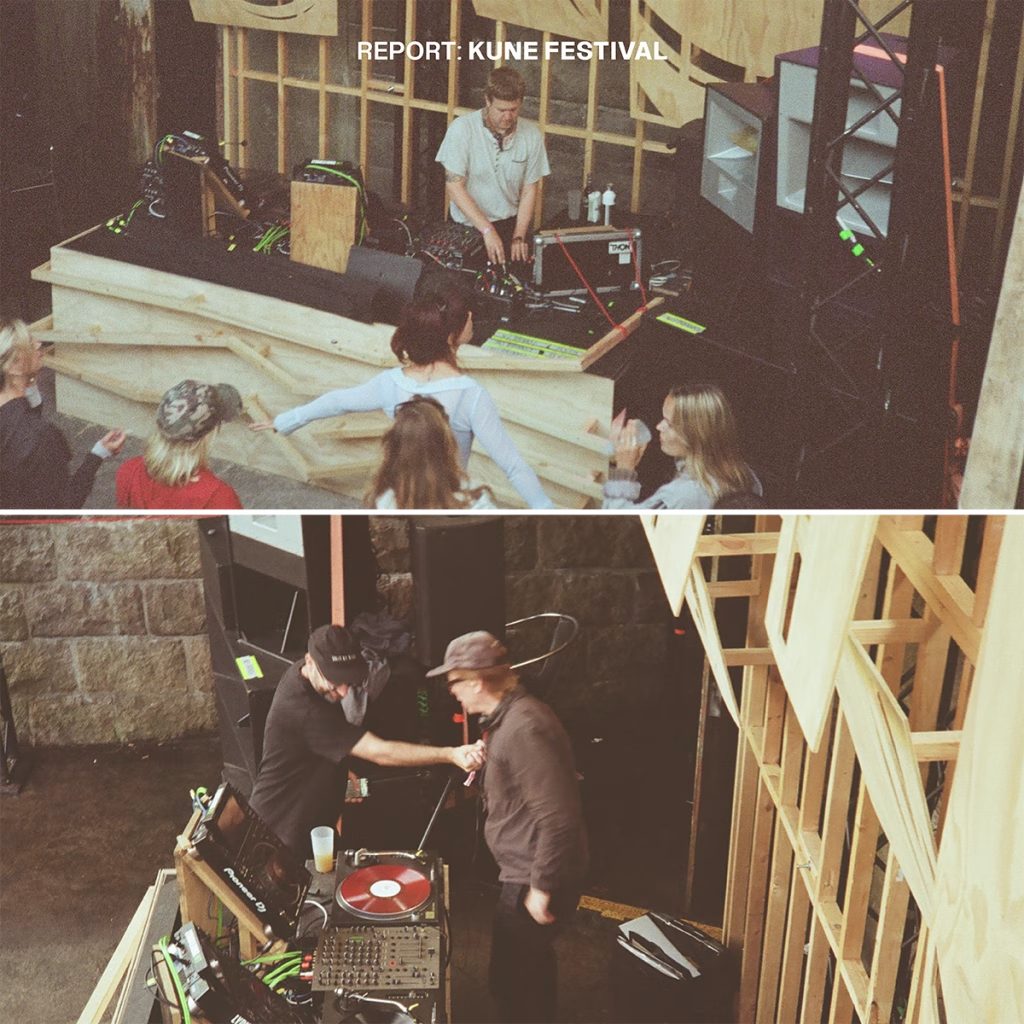
Meanwhile, the open cavern of Vessel offered an alternating program of psy and progressive techno with artists such as Matriark, Marius Bø, Martin Gilleshøj, and Takumi Inamoto, while also carving space for hypno, bass-heavy rhythms, and more organic techno with sounds from artists such as Maria, Hewan Aman, and Sunju Hargun, alongside live sets like by Nadia, Peachlyfe, Reptant and Sansibar. From the first to the final closing sets of Kasper Marott and Sybil, the crowd – rain or shine – remained fully immersed, head to toe, utterly receptive.
Finally, Astral presented a left-field, distinctive program of live performances that blended art and music, with analog and classical instruments at the forefront. Such as the fusion of piano, live electronics, and figurative art from Academia x Polina Fradkina and Brian Veis, as well as Baronato Quattro Bellezze’s Italian live band delivering low-end psychedelia steeped in symbolism, culminating in ambient curated sets by artists such as Studio Natura. True to its explorative spirit, Astral also invited performers from other stages to present ambient sets, giving artists the freedom to experiment and express themselves without the constraints of fixed genres.
Naming remarkable sets would not give justice to the flowing and natural yet diverse curation of the music journey of the festival. We just invite you to take a look at this line-up (https://www.kunefestival.dk/program) to imagine what has been, and what you could experience in KUNE’s next edition.
The performance art curation complemented the sonic identity of the festival. Conceived as interactive, participative, provoking and intimate, the curation engaged the festival goers and pushed us to engage with vulnerability and introspection. This co-creative process invites attendees to embrace imperfection, to accept mistakes as vital to growth, and to cultivate openness and curiosity. Complementing this, daily talks on art, music, and community encouraged the exchange of perspectives and ideas about how these elements bring us together, inspire transformation, and foster belonging.
In this context, KUNE as an independent, small-scale, and community-based space, signifies clear practice in redefining what people can create together in a five-day bubble. Rather than an escape, this bubble is a sandbox to experiment with how returning to everyday life could be reshaped: a blank space to reimagine and rescale, helping us navigate complex times with imagination, care, and a renewed sense of possibility.
From this year onwards, the festival will be taking place only once every other year. We arrived on the island not knowing what to expect. We left the island inspired by the growing potential of what individuals could build in their small-scale reality by taking part in such a project fueled by passion, igniting transformational potential when bodies and minds move through culture and care.