One of the most discussed topics of these last months that upsets the electronic music scene is Aslice’s closing. For the readers who don’t know, Aslice is a platform made in 2022. The platform was aiming to fix the economic gap between DJs and producers. Starting from the beginning we all know that without producers there won’t be music to listen to as to play for DJs. The actual music economic system, electronic or not, is based mostly on performances: earnings producers get are quite low in confront of what a performer earns in just one month of gigs or concerts, this push producers to undertake a DJ/performer career to live with music incomes and, often, is not the right solution or the real will of those artists. Aslice was born as a revolutionary platform to finally put a fair-share balance income between who plays and who produces, but how?
The platform worked like an archive of tracks and songs where any DJ/Performer could donate to: they might, after their gigs, upload the played tracklist (in such an easy way) and donate a fee’s percentage that will be split in fair amount between the producers of the track played. This could have been a big step for the economic music balance beside several advantages and goodness given in the last 2 years.
In the last “Audience Strategies Report” by Aslice, we have read that, via Aslice, $ 422.696 have been shared by DJs with producers. A large amount considering that through the PROs (Performing Right Organizations like BMI) this amount has never seen the light. Indeed 70% of DJs or performer never submit playlists to the PROs and, when submitted, those playlist are not truthful to what was really played. After some statistics done, is said that $ 0.05 is the average payment per track by PROs, meanwhile Aslice is paying per track an average amount of $ 1.60, that is the amount a producer earn with 366 plays on Spotify. Aslice so was a wonderful initiative that had a great impact for the underground music scene, beside the economic facade, the platform gave an important motivation to the upcoming producers. Finally the chance to know and see that your tracks are played by major and minor artists in clubs around the world gives a positive push to make better and more music and to take visibility through the audiences. This had such a good psychological impact for artists.
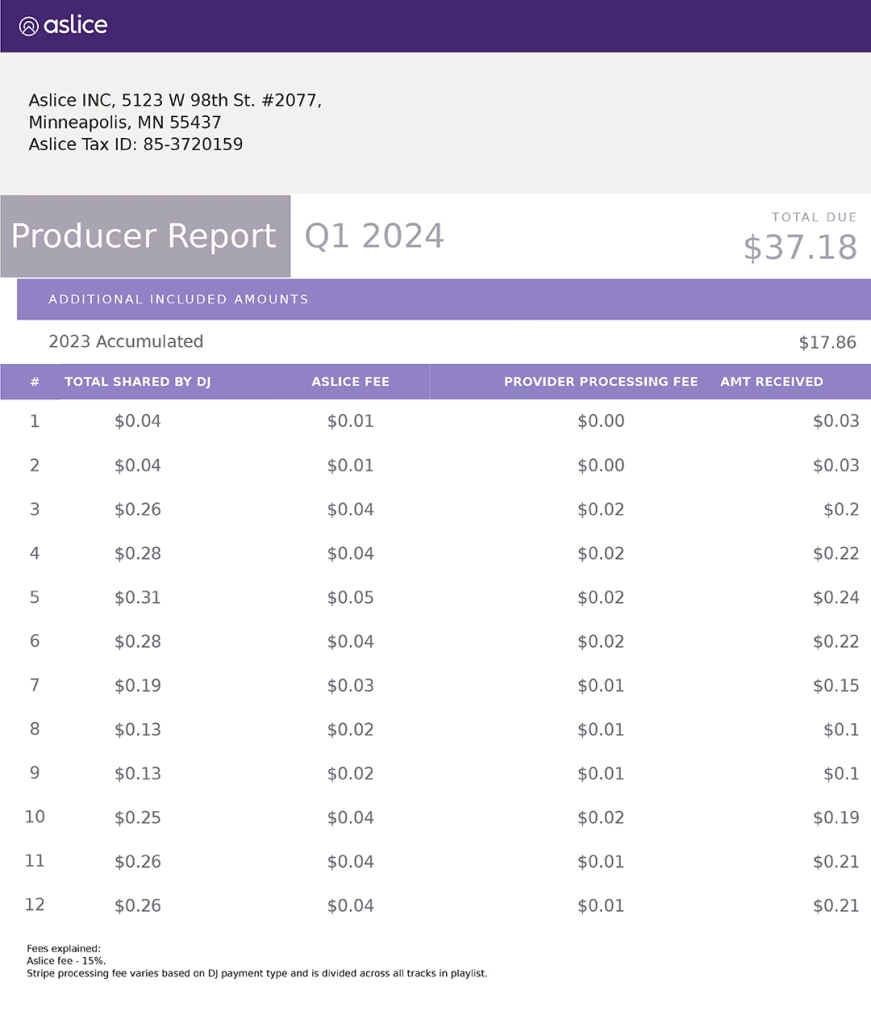
Now, why is Aslice closed? What leads this great revolutionary platform to shut down? Such a great thing for the music industry had to close. We had the chance to check with a well known producer the statistics of his incomes with Aslice and the results were not what we expected. At the beginning, when the hype was wide, the artist could get a fair payment: it was done any quarter of the year after overtaking the limit of $ 50 that Aslice required to proceed with the payment. Easy amount to reach considering the calculation read. Everything in the beginning has big hype and so do people but then with time probably something starts to get wrong. Most of the DJs playing tracks and sharing tracklists were not donating a fair percentage or at least a minimum of 10%. With statistics in our hands we notice that, not the big names of the scene were not donating enough (just imagine), but the ones who right now are the majority of the scene, the one who took part in it in the beginning.
Without considering the expensive mainstream DJs (a lot of them never contribute to Aslice even though they earned more than $ 5/10.000 per gig), we calculate that with just a fair 10%, the middle wage DJs (that are the majority and are the ones with more hype around because they are mostly upcoming talents and the one who are “leading” the scene on social networks and even the ones who get more gigs) could really let the music economy run in the best way possible thanks to Aslice. The same people who in the beginning supported the platform as a revolutionary act didn’t act as it was supposed to do. Was it just a facade to support and be cool to a new innovation?
How did those DJs really support the initiative?
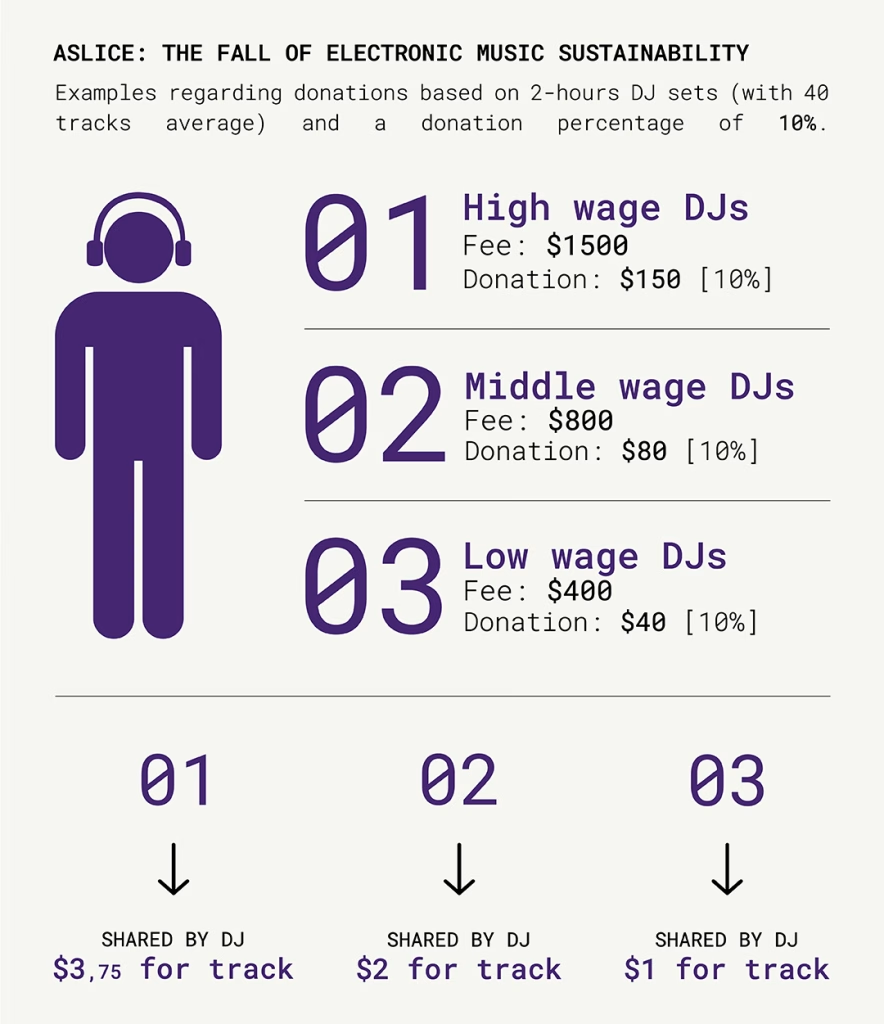
If everyone would have given a fair contribution to it, we think Aslice won’t close. We have to remember that Aslice still gave jobs to people and as a startup it needed funds to get going. The fees taken by the platform were just 15% of the DJs contribution. But what if on a fee of $ 1000 the DJ just contributes economically to the producers with a total amount of just $ 5? If we consider a DJ set of 2 hours it consists of 35/40 tracks on average. So it means that, after calculation, the producer could get paid sometimes even just $0.01.
That was probably not the achievement Aslice was working on.
If we consider a line of 3 different DJ wage we have:
Low wage DJs: $100 – $500
Middle wage DJs: $500 – $1500
High wage DJs: $1500 +
Beside this issue we have to consider that not all the DJs approached to the use of Aslice and not every DJ buys tracks or records, mostly they just ask for demos or they download it in illegal ways. The highest percentage of music run on the platform was mostly Techno, all the other electronic music genres were played in such low percentage like House, DnB, IDM, Ambient, Trip-Hop and whatsoever. We want to remind all the DJs and music lovers that the most important way to support an artist is to buy music, whether digital, vinyl, CD or cassette.