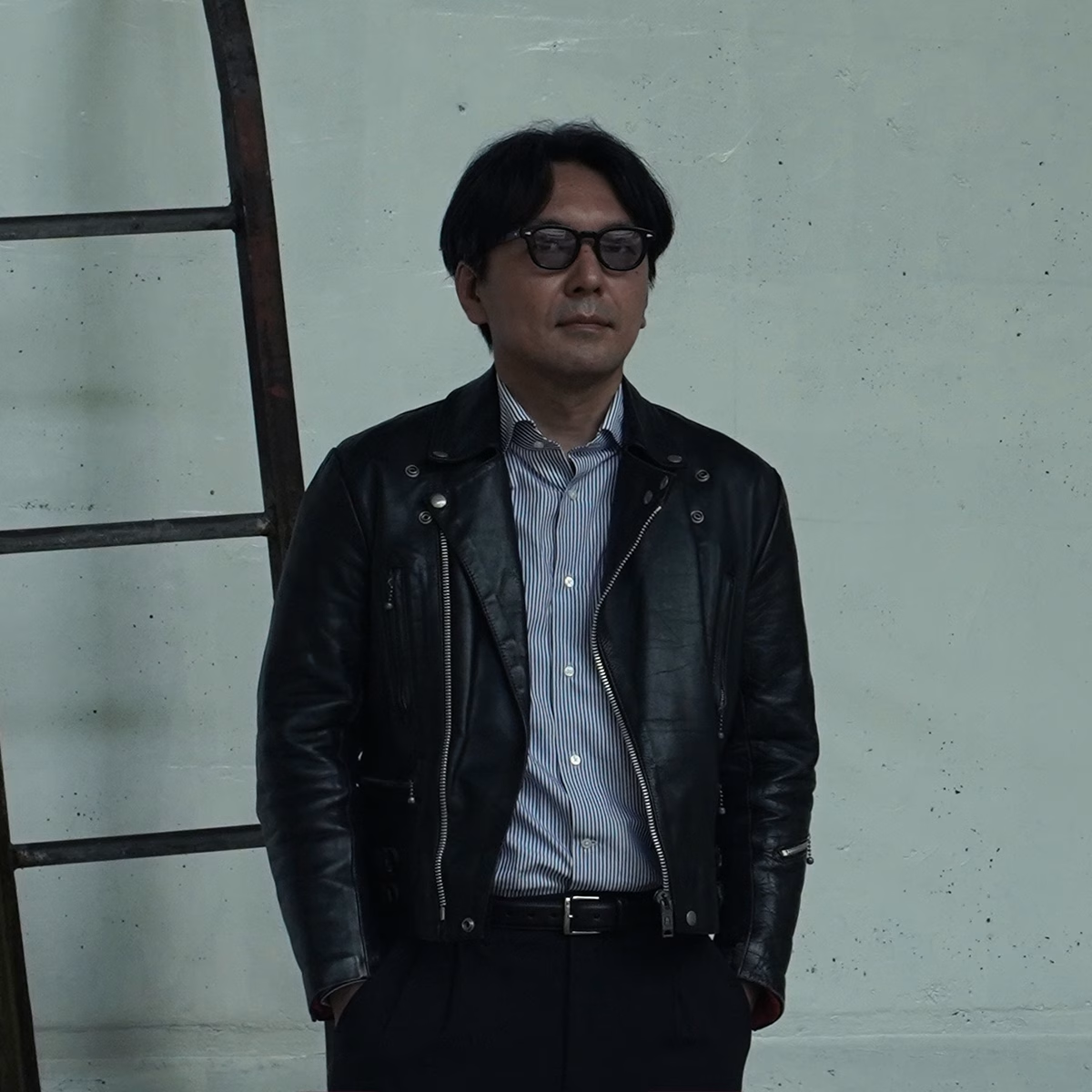
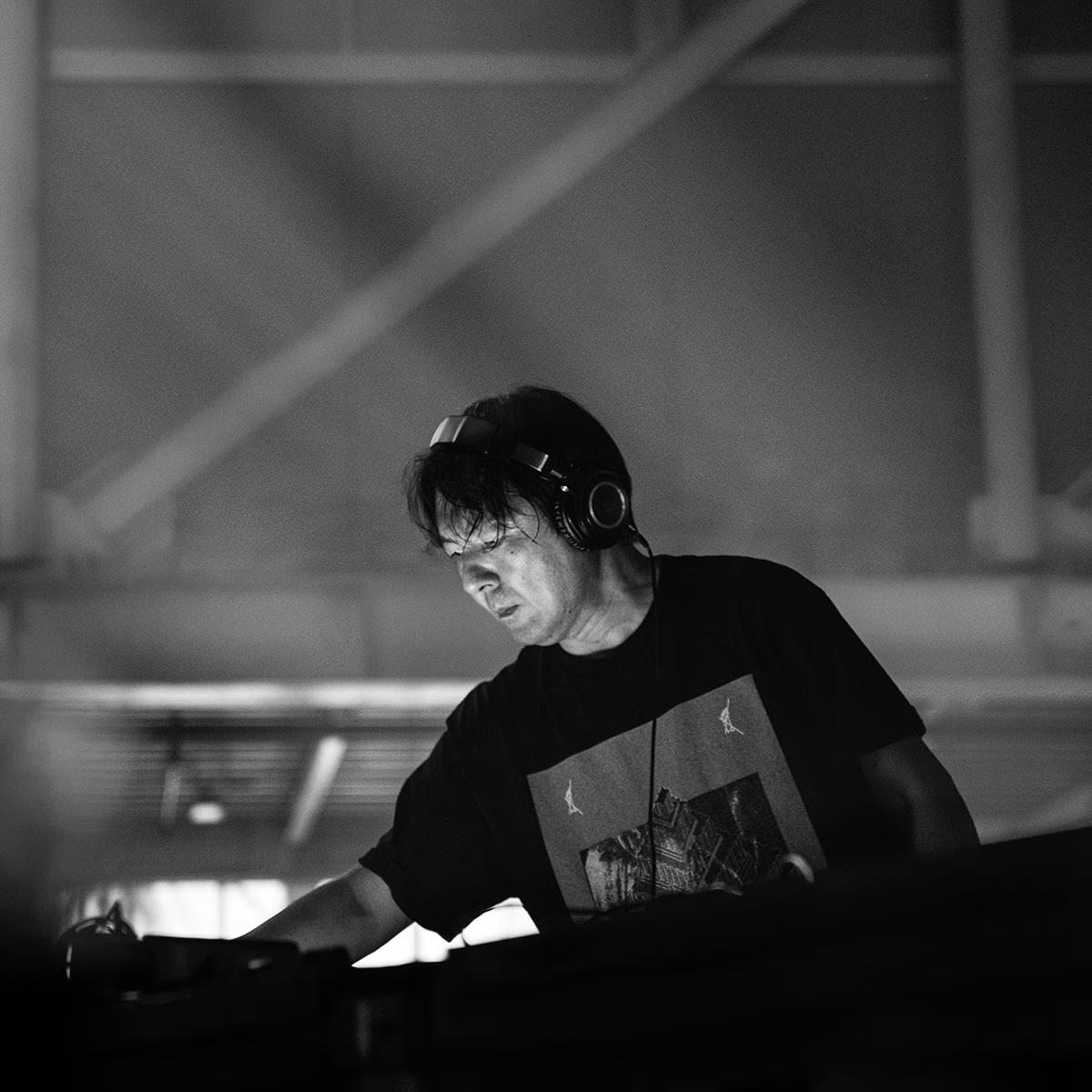
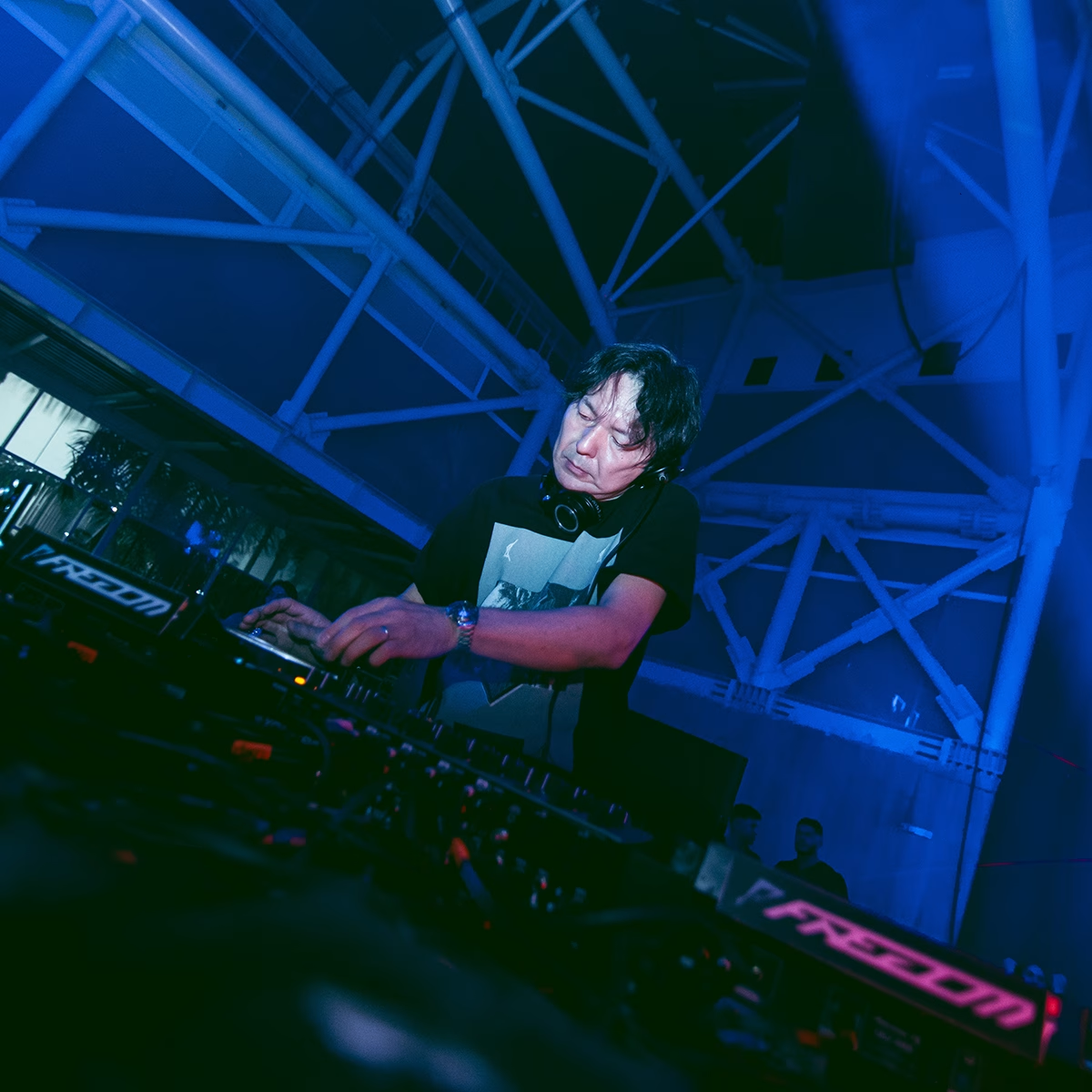
DJ SHUFFLEMASTER, alias of Tokyo-based producer Tatsuya Kanamori, is one of the most influential figures to emerge from the Japanese techno scene in the late 1990s. Closely associated with the seminal Subvoice label, he developed a groove-driven and functional sound that quickly attracted the attention of European techno institutions.
His international breakthrough came with the release of his debut album EXP on Tresor Records in 2001 (reissued in 2023), positioning him among the first Japanese techno artists to gain worldwide recognition.
In 2014, DJ SHUFFLEMASTER founded his own label Shiki Kyokai, continuing to explore a stripped-back, physical form of techno rooted in rhythm, shuffle, and long-form club dynamics. Through his label and ongoing collaborations, Tatsuya Kanamori has remained committed to a form of techno that resists excess and spectacle, favouring longevity, precision, and emotional restraint.
In this conversation, we look back at the formative influences that shaped his path—from early encounters with hip hop, punk, and new wave to the emergence of Tokyo’s underground techno scene — while also exploring his creative process, his view on today’s electronic landscape, and the balance between club functionality and emotional intent. The interview also touches on upcoming releases and the mindset behind the mix recorded for Palpebræ.
Have a good reading and listening!
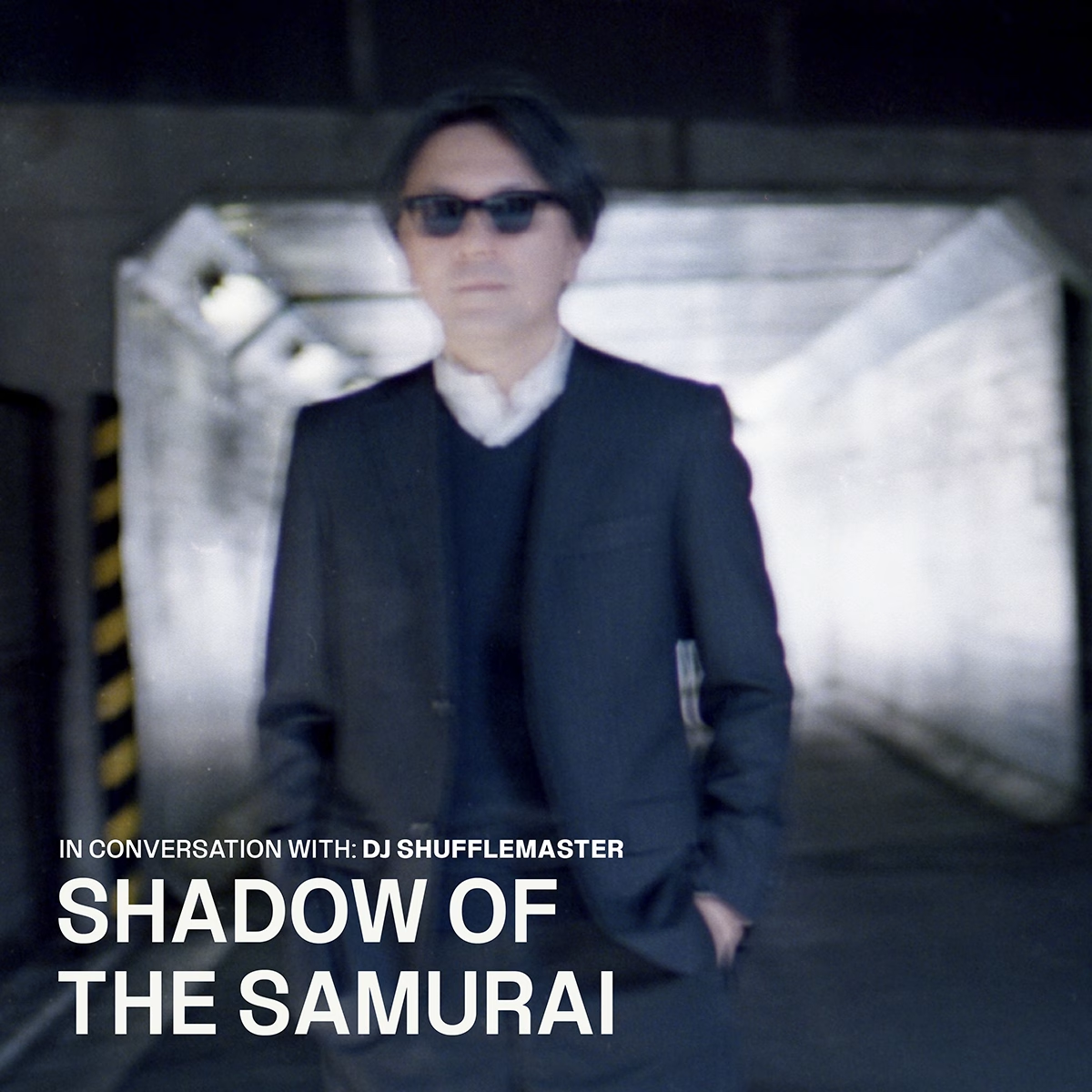
☉ Can you tell us about the early days of your journey as DJ Shufflemaster? What were the first sparks that pushed you toward electronic music?
“I’ve been influenced by many different kinds of music and experiences, but I’ll try to give a concise overview.
When I was in the fifth grade, I saw a joint live performance by RUN DMC and Aerosmith on MTV, which had a huge impact on me. That was the moment I first became aware of performing with two turntables. At the same time, I was drawn to the sound of The Power Station, Prince’s KISS 12-inch records, and Japanese pop music influenced by those artists — especially the funky basslines and dance-oriented approach of mid-1980s mainstream pop.
From junior high school onward, I also became deeply interested in glam rock, punk, pub rock, and new wave. I would go to concerts by artists like Nick Lowe and Wilko Johnson whenever they came to Japan, even if it meant attending the night before an exam.
Through punk and new wave, I was strongly influenced by Don Letts and Mick Jones’ Big Audio Dynamite. Their sound made me want to create music myself. When I entered university, I bought a sampler and a Macintosh, and that ambition started to take shape. Big Audio Dynamite, in particular, has had a lasting influence on me.
☉ Your alias has become iconic. What’s the story behind “DJ Shufflemaster,” and how has that name reflected your evolution as an artist?
“I’ve been asked this a few times over the years, but there isn’t a particularly serious story behind it.
When I released my first solo EP, I wanted to use an artist and DJ name that wasn’t my real one. At the time, I was heavily into Chicago house, so I wanted something that sounded like a Chicago house producer — names like Farley Jackmaster Funk or Mike “Hitman” Wilson were references for me.
It’s a simple reason, but the groove, shuffle, and bounce of Chicago house have strongly influenced my productions. That’s why I chose the word “shuffle,” and I’ve continued using DJ Shufflemaster as my DJ name ever since.”
☉ Your productions often combine raw energy with something deeply emotional. What drives your creative decisions when you’re in the studio?
“When it comes to production and sound creation, I usually begin by selecting instruments, effects, and plug-ins that catch my interest, then experimenting with their controls.
Once I feel comfortable with them, I try to translate any ideas or images I have into sound.”
☉ What inspires you outside of music — art, philosophy, cinema, daily life?
“It’s been the same since I was young: most of my ideas come from everyday life.
More specifically, I’m often inspired by non-dance music and films.”
☉ How do these influences shape your sound or mindset?
“I tend to imagine how I would reinterpret them — what kind of sounds I would add, or how I might rework them. In that sense, it’s similar to thinking about how I would create a remix or compose a soundtrack. It’s very much like making a soundtrack in my head.“
☉ How would you describe the current Japanese electronic music scene?
“Personally, I feel somewhat pessimistic about the scene due to economic factors and Japan’s declining birthrate.
That said, I strongly believe that talented young people will continue to create interesting things out of difficult circumstances. In fact, despite the challenges, I feel that the underground electronic music scene is seeing an increase in both producers and DJs.“
☉ What is your perspective on today’s techno scene — from releases to artistic identity?
“I don’t really have anything to criticize about the techno scene. In the 1990s, there was a clear distinction between the mainstream, the underground, and everything in between — and I don’t think the situation is fundamentally different today. I understand that social media now plays a significant role, alongside the reputation of releases and DJs, but personally, I don’t feel that it has much to do with my own approach.”
☉ What can we expect from you in the near future — in terms of new releases, projects, collaborations, or anything else you’d like to share?
“I did a remix for a Canadian artist called ESSE RAN has just been released on Humidex Records.
I’m also planning a split EP with him on Deetron’s label, Character.
Additionally, I’ve contributed a track to Biometric-Audio in Hamburg, Germany.
Looking ahead to next year, I’m hoping to revive my HOUSEDUST label.”
☉ How did you approach the mix you recorded for Palpebræ? Is there a concept or emotional thread behind it?
“While updating my Rekordbox, I rediscovered several tracks I’d never played before, so I added them to the playlist. I also included a few of my own tracks that I hadn’t played out yet.
These are records I expect to be playing in clubs for a while, so this mix works almost like a preview of what I’ll be playing at upcoming gigs.”

![In conversation with: Juan Rico [Reeko, Architectural]](https://palpebrae.com/wp-content/uploads/2026/02/interviews-1-300x300.avif)