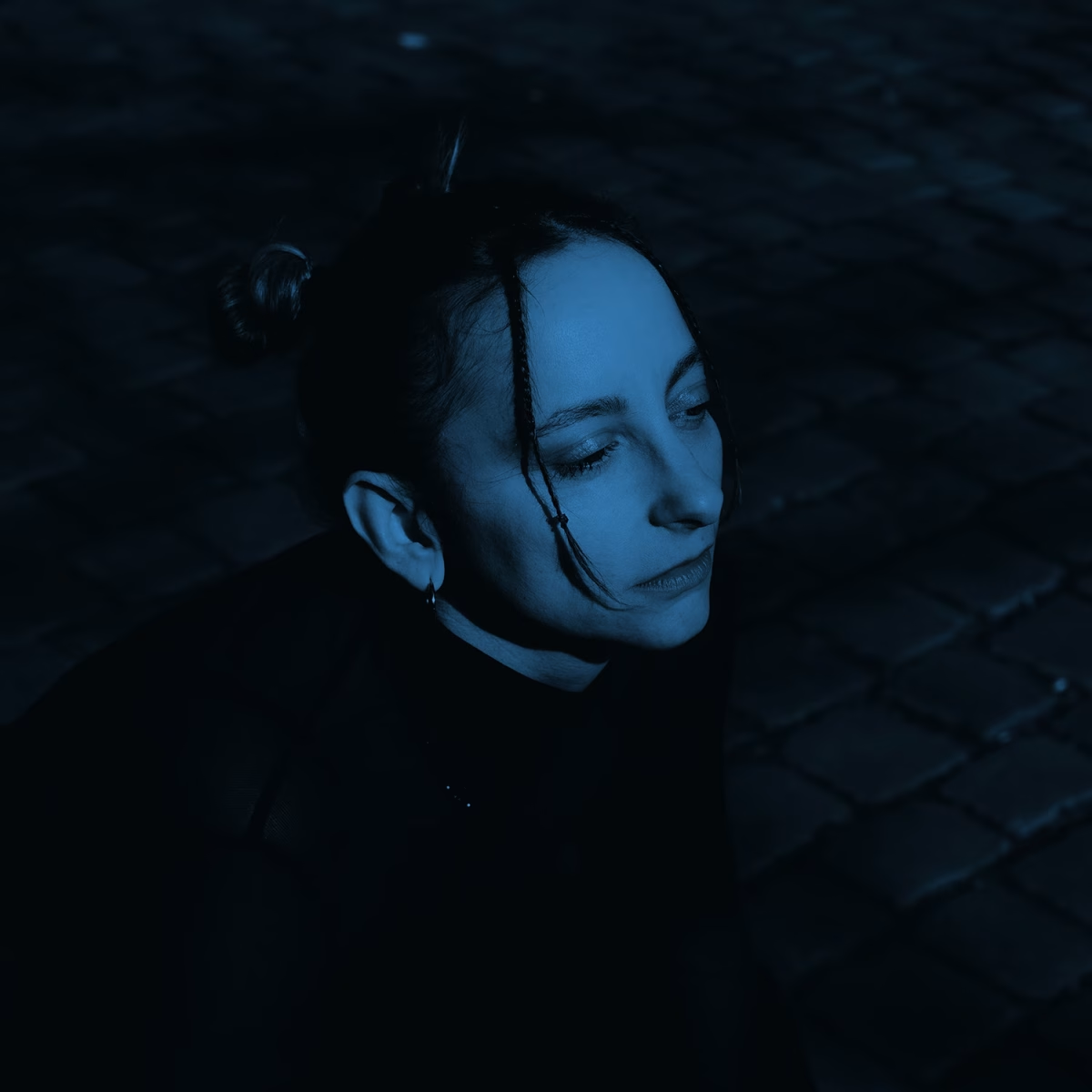
Composer, sound designer, engineer, and performer: Elisa Batti is a multifaceted artist who moves with both awareness and sensitivity through the contemporary European electronic scene. Originally from Friuli but now based in Amsterdam, her music emerges from a deep personal urgency and an unrelenting curiosity for the world around her — cultural, political, and aesthetic.
From clubs to theaters, from collaborations with choreographers to her releases on labels such as Detroit Underground, and the founding of Immaterial.Archives, Elisa has been building a sonic vision that is both fluid and precise, where sound is never just form, but a narrative tool and a space for connection.
We spoke with her about nonlinear paths, life as an expat, collectives, modular synths, techno futures, and the transformative power of sound.
Have a good reading and listening!
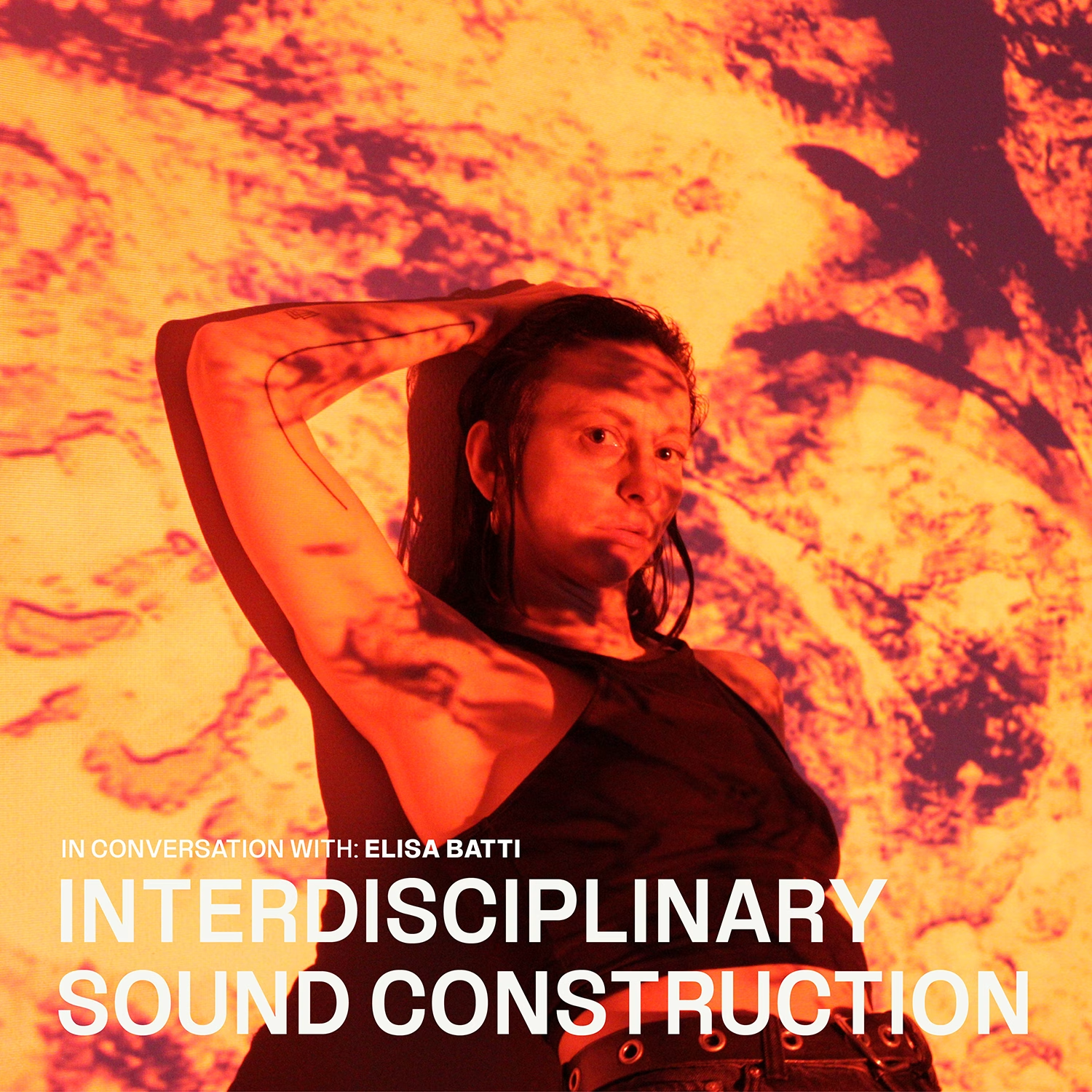
☉ When and how did your musical journey begin? Was there a specific moment when you realised music would become more than just a passion?
“My musical path developed gradually, but the real turning point came when I enrolled in the Electronic Music Conservatory in The Hague, during my second year living in the Netherlands. Until then, I was a typical bedroom producer: experimenting on my own, driven more by personal urgency than a clear vision. Before that, in Friuli, I was deeply immersed in the music scene as an avid listener—I wouldn’t miss a concert between Ljubljana, Milan, social centres, experimental festivals, and raves. I experienced music with my body and ears, more than with my hands.
I had moved to the Netherlands for a PhD in environmental engineering, but at a certain point, I went through a deep crisis: I realised that, despite all good intentions, my work was part of a perfectly oiled greenwashing system. I decided to complete the PhD—to close the circle—but internally, a rupture had already occurred. I needed a new language, my own. So, while finishing the PhD, I enrolled in the Conservatory. From that point on, I began collaborating with theatres, choreographers, visual artists… and music became my way of being in the world.”
☉ You’re Italian but have been living in Amsterdam for years. How has this city influenced your approach to electronic music?
“The city I live in has been fundamental to my growth. I know that if I had stayed in Italy, I would have become stagnant. Amsterdam isn’t a frenetic or obsessively pushy city, but it’s like a diesel engine: it constantly provides stimuli and input without overwhelming you.
What I appreciate most about living here is definitely the professional aspect. Let’s be honest: otherwise, I’d still be in Trieste, drinking spritz and diving into the sea! Here, there are advantages—especially in the creative field—that unfortunately are lacking in Italy. There’s a greater cultural offering, but above all, the concrete possibility of actively participating. If you want to do something and have the drive, you can really do it. And in doing so, you start to define who you are as an artist, what you want to say, and how you want to express it. I owe a lot to this city.
The electronic scene—especially techno—is buzzing, particularly after the pandemic. Previously, the club culture was dominated by bookers and their entourage of DJs. Now, Amsterdam is the city of collectives: horizontal realities that overturn hierarchies, where organisation is shared. Clubs provide the space, and collectives curate line-ups, artistic direction, artist care, awareness teams… making more people involved and recreating a spirit of genuine community and collaboration. Among the collectives, there’s a strong sense of mutual support: it’s a large extended family. The atmosphere we’ve created is truly unique and beautiful.”
☉ Your artistic research often intertwines sound, visual art, and conceptuality. How does a project of yours come to life? Do you start from an abstract idea, or do you let the sound guide you?
“I’m very cinematic in conceiving my creations. I was fortunate to start composing music for other art forms—contemporary dance, installations—and this allowed me to enter the musical language from a different perspective: much more visual, narrative… I’d even say almost plastic, in the sense of moldable and complementary to the image or movement.
In these contexts, it’s essential to tell a story, convey a mood or sensation. That’s where I developed my way of thinking about a project: I ask myself what atmosphere I want to evoke, or I start from a mental image and try to translate it into sound. It’s a very synesthetic process.
That said, I never follow a fixed formula. Sometimes I power up the modular synth and let the moment guide me, without any predefined idea. It depends on where I am, what I feel, what I want to discover.”
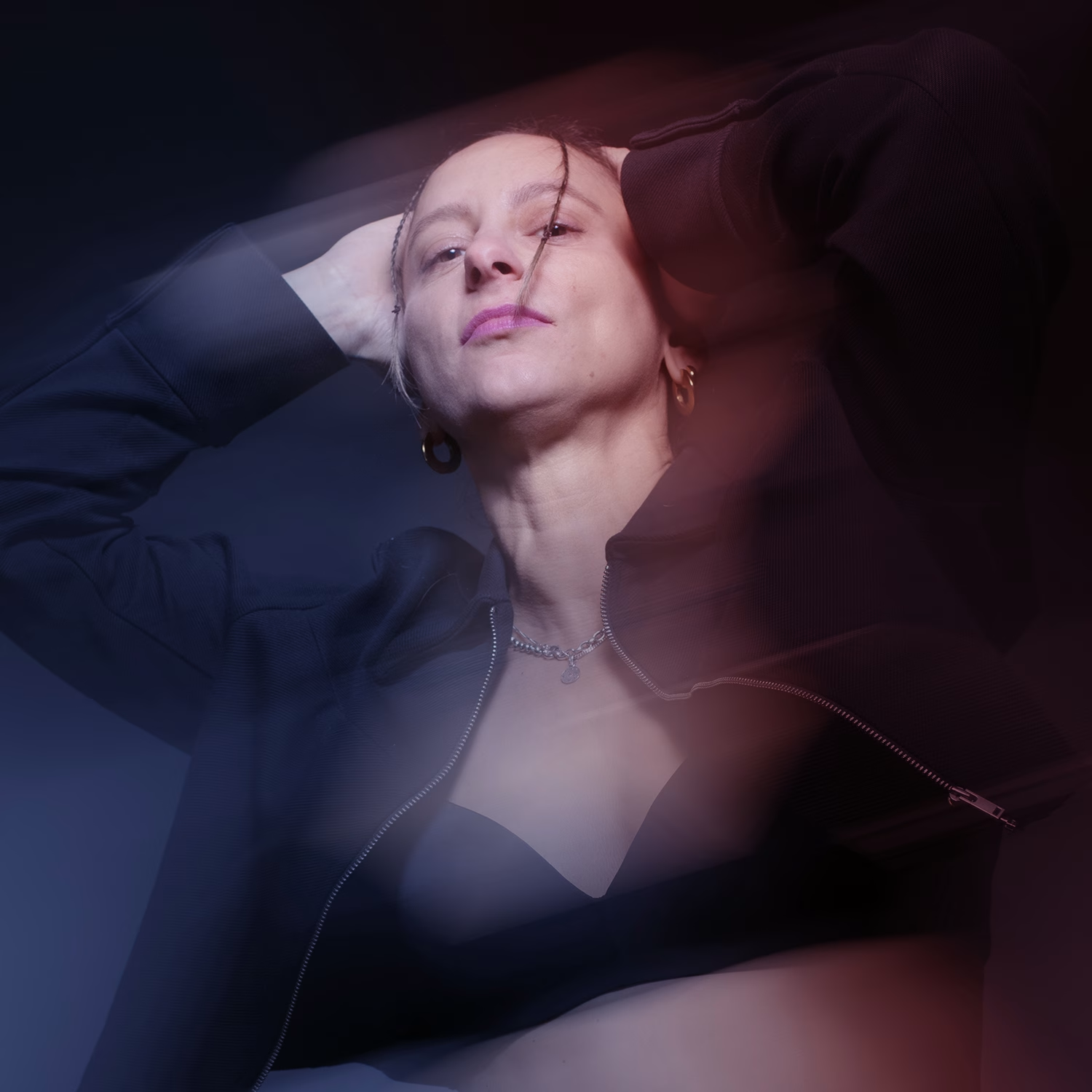
☉ You’ve created works where music and dance blend seamlessly. What kind of emotions and sensations do you experience while working on these creations?
“When I collaborate with a choreographer, the first thing I ask about is the concept behind the piece: I need to understand what drives them culturally, what books they’re reading, what’s the “well” from which they draw their ideas. I always ask what mood they want to evoke, a playlist, and a mood board—sonic references, genres, atmospheres, but also images, colours, visual suggestions. This helps me enter their imagination and understand their aesthetic taste.
Creating on commission is one of the most formative experiences: it means reinterpreting a taste that’s not yours but doing it through your sensitivity. Each time, something unexpected is born, something I probably would never have thought of creating on my own. It forces me to step out of my comfort zone.
I remember a project with an artist passionate about pop who asked me to use super commercial tracks as a reference. I was sceptical—I’ve never been a fan—but I accepted the challenge. I reworked some tracks in an electronic key and was amazed by the result. Pop music works precisely because of its simple and catchy structure. It was an experience that taught me a lot.
Working with dance also taught me the concept of dynamics: the importance of varying tension, giving space. And the fact that sound is just one element—often, silence becomes an integral part of the sound design.
In more technical projects—motion sensors, interactivity with lights, 3D sound—70% of my brain is occupied by technology, and the sound component comes almost at the end. The emotions there are… frustration and anger because nothing ever works on the first try! Haha.
The greatest joy comes when everything merges and the work is ready: when music, movement, space, and light unite into something organic, fluid, alive. And then there’s one thing that moves me every time: seeing performers move to my music. I don’t think there’s a greater pleasure.”
☉ Your work involves the use of advanced technologies. What role does technology play in your creative process?
“Lately, I’ve set aside programming aimed at sound design a bit, even though software like Max/MSP and SuperCollider were my first love and approach to music. Today, I lean more towards club music, although I still—albeit to a lesser extent—work for theatre and sound design. The reason is simple: time.
I’ve learned, even with difficulty, to choose my battles. I’m enthusiastic by nature and would like to do everything… but then I get stressed and find myself behind on a thousand fronts. Now I’ve learned to say no, to focus on a few projects that truly stimulate me.
That said, technology remains central. I have a rather nerdy approach—thanks to my scientific background. I’ve been working as an engineer and researcher for 15 years, first in universities and now at the Dutch national research centre in the field of energy transition… so yes, I’m a total nerd!
I’m attracted to tools that force you to read manuals for hours before even playing a note. I try to carve out at least one day a month to study, watch tutorials, explore new techniques. It’s my way of not getting stuck, of avoiding the standard approach.
A downside? I tend to complicate my life, especially with arrangements. I always want the hardest way… but I’ve learned that sometimes the simple one is also the most effective. So I seek a balance between complexity and clarity. My secret dream? To one day reach a super minimalist approach. Less, but better.”
☉ How do you prepare your live set? Do you have a precise methodology or do you follow a more instinctive and experimental approach?
“I don’t have a fixed methodology, rather an evolving one. My approach to live sets has changed a lot over time. I started performing live before doing DJ sets, with a band (with a singer whose vocal samples are still used in my tracks, and a guitarist). At first, I used a Mac with MIDI controllers, but the anxiety that everything would crash was very high.
Then I switched to hardware: I travelled with a suitcase full of machines, but it was stressful. Now I use a lighter and more compact setup: an Octatrack, an Analog Rytm, and two Strymon effects (reverb and delay). It works well, although improvisation suffers a bit because the Octatrack has preloaded samples, so I have a fairly pre-set structure.
My live set was born spontaneously during a period when I was unemployed. I was able to compose every day for two months without interruption. Since then, the live set has been continuously evolving: every new thing I produce and like, I insert into the set, replacing the old material.
I’m thinking about a new, more techno-oriented set to create in the second half of this year, perhaps with the Octatrack, the Rytm, and part of the modular. I hope this time bookers won’t get confused anymore; it’s happened several times that I was called to play my live set thinking it was techno while I was playing ambient/IDM… oops!”
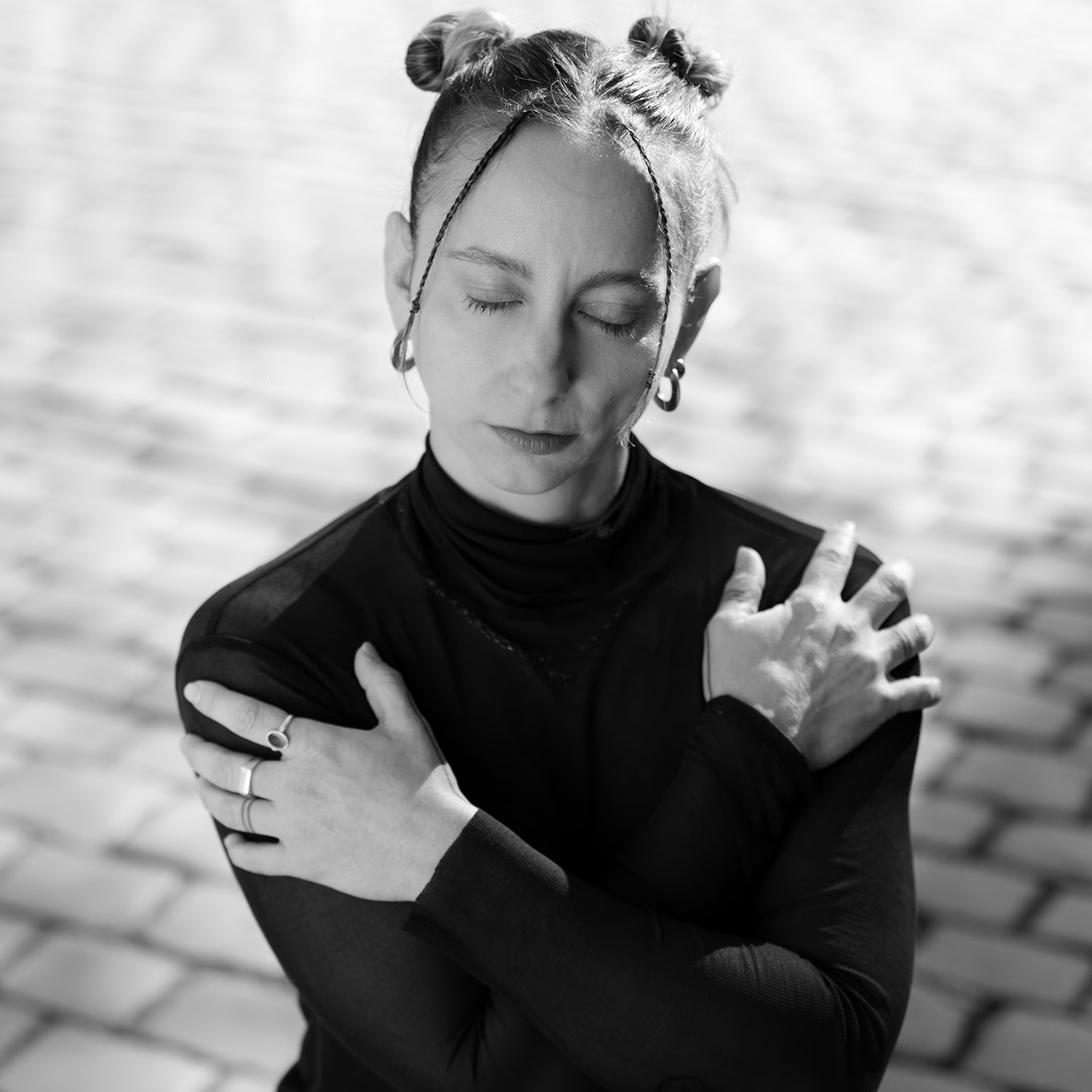
☉ One of your first “techno” works was released in 2018 on the iconic label Detroit Underground. How did this collaboration come about?
“The release on Detroit Underground came through the Japanese label Progressiv Form, on which I was releasing when I had the band. I don’t remember exactly how, because it’s a fairly distant past in my mind.
I had disbanded the group because it involved too much work, and I wanted to focus on a solo project. In the meantime, I met my label colleague CYB, and we started jamming together; various tracks were born from these sessions.”
☉ In 2018 you founded Immaterial.Archives together with CYB. What motivated you to create an independent editorial space?
“Immaterial.Archives was born out of a desire to have a free space where we could release our own productions as well as those of artists we admire. Initially, it was a personal project, but it quickly opened up to a wider community: friends, emerging talents, and established figures alike.
The goal was—and still is—to create a sonically coherent platform that remains open to different visions.
Starting in 2026, I’d like to renew the label’s visual identity, return to vinyl, focus more on my own productions, and launch a new series dedicated to ambient and experimental music. I also want to continue supporting women producers—a mission that holds political value for me as well.”
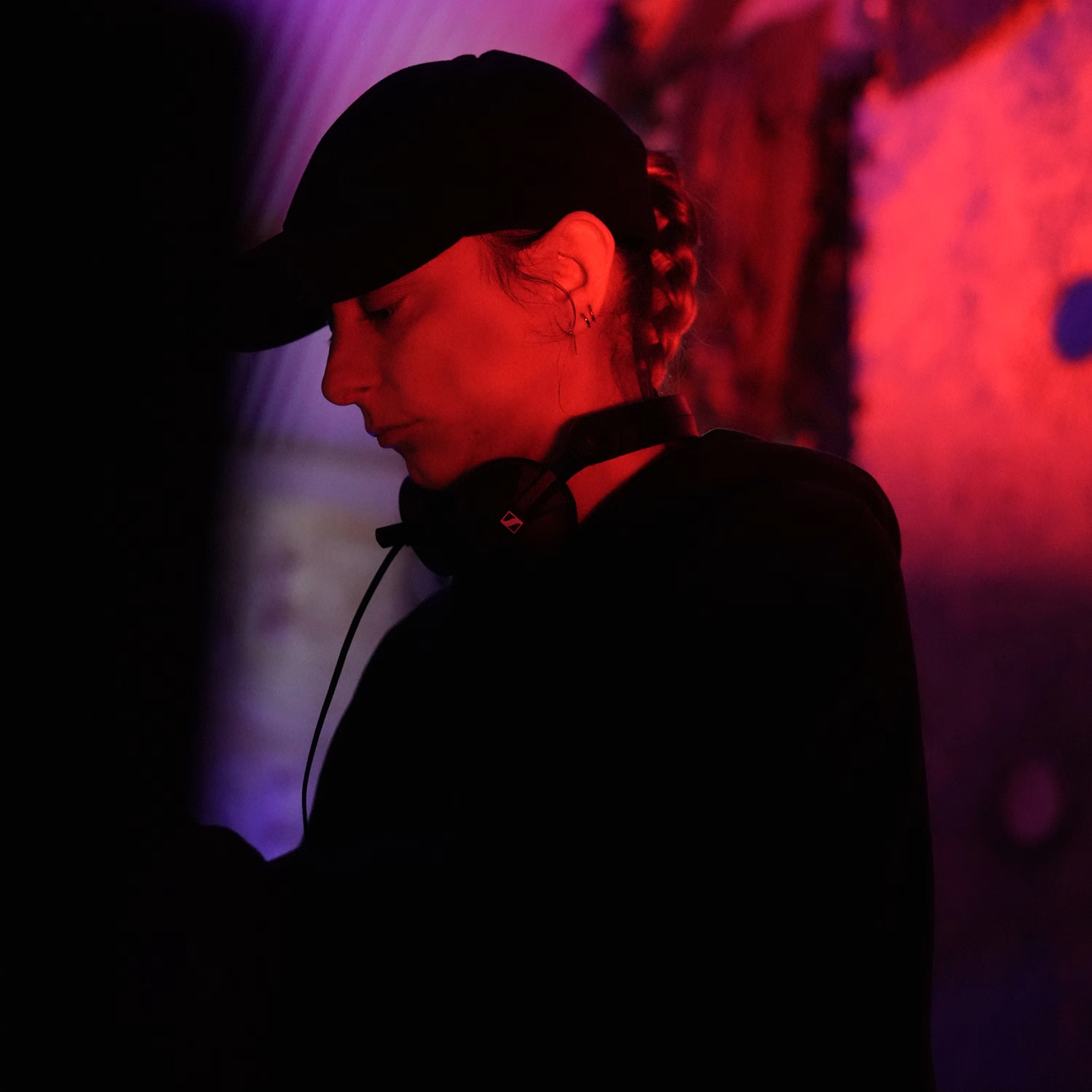
☉ Looking ahead, what artistic directions would you like to explore?
“At the beginning of each year, I make a list of ideas and projects—it helps me channel my energy.
Right now, I feel the need to deepen my relationship with techno, both in terms of production and performance. I’ll never completely abandon experimentation or ambient music, i want to temporarily set them aside to focus on a more straightforward, club-oriented aesthetic.”

![In conversation with: Juan Rico [Reeko, Architectural]](https://palpebrae.com/wp-content/uploads/2026/02/interviews-1-300x300.avif)