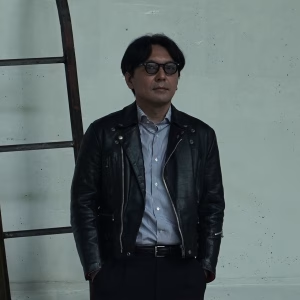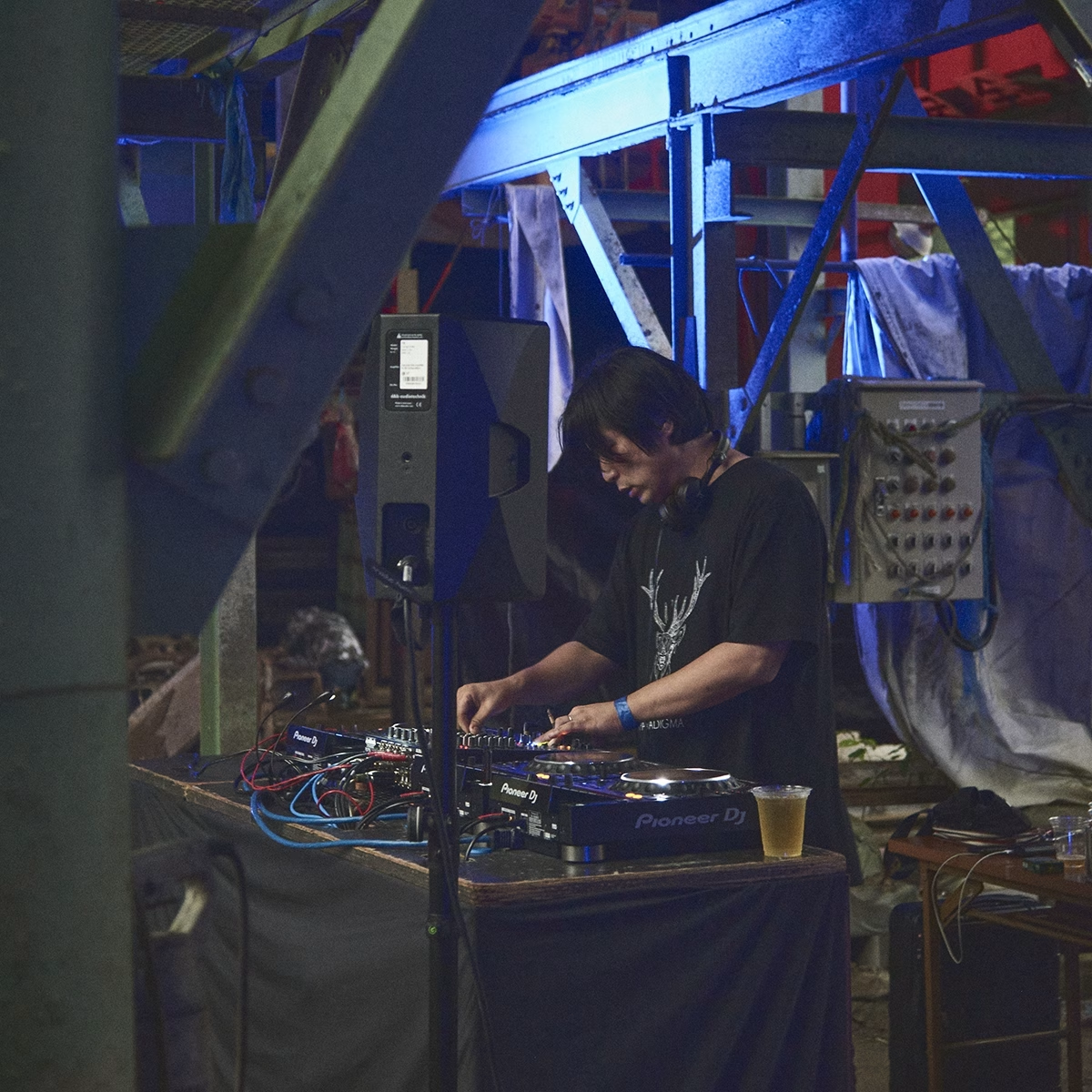
YUKIMASA is a Japanese DJ and producer with a career spanning over two decades in the global electronic music scene. He began his journey in the late 1990s in Anaheim, California, before returning to Japan in the early 2000s, where he quickly became a prominent figure in Tokyo’s underground circuit.
Known for his genre-defying sets and forward-thinking approach, YUKIMASA has built a reputation for blending deep musical insight with raw dancefloor energy. In 2007, he launched his long-running event series FORCE, held regularly at the iconic WOMB Tokyo, and in 2019, he founded Paradigma Records, a label dedicated to cutting-edge sounds from across the globe.
With performances at internationally acclaimed venues such as Tresor and OHM in Berlin, and Gare in Porto, YUKIMASA continues to push boundaries, collaborating with a wide range of artists and constantly evolving his sonic identity. His deep commitment to innovation and global collaboration defines his distinctive presence in today’s electronic music landscape.
Alongside a live recording from “HUMMØ”, held at Espacio Perpendicular in Madrid, we had the chance to share a few words with him about his career, the Japanese techno scene, his own label Force Paradigma and obviously about his “Force” parties.
Have a good reading and listening!
☉ Your career started in Anaheim, California. What brought you there in the first place? Tell us about those early years and what your first steps in music were like.
“After spending my high school years in Fukuoka, Japan—where I was born and raised—I moved to the United States because I was interested in working in music and film. In Anaheim, I joined an alternative hip-hop band as a turntablist. The group included five MCs, a guitarist, a bassist, and a drummer.“
☉ Your “Force” parties, launched in 2007, have reached their 45th edition, becoming a cornerstone of both your career and personal journey. How challenging has it been to keep them alive over time? And what do you envision for their future?
“Continuing FORCE has never felt difficult for me, because it simply means doing what I love. More than anything, I’m always grateful to the clubs and their teams who support my work, as well as to everyone who attends the events. Looking ahead, I plan to keep developing FORCE while embracing new challenges along the way.“
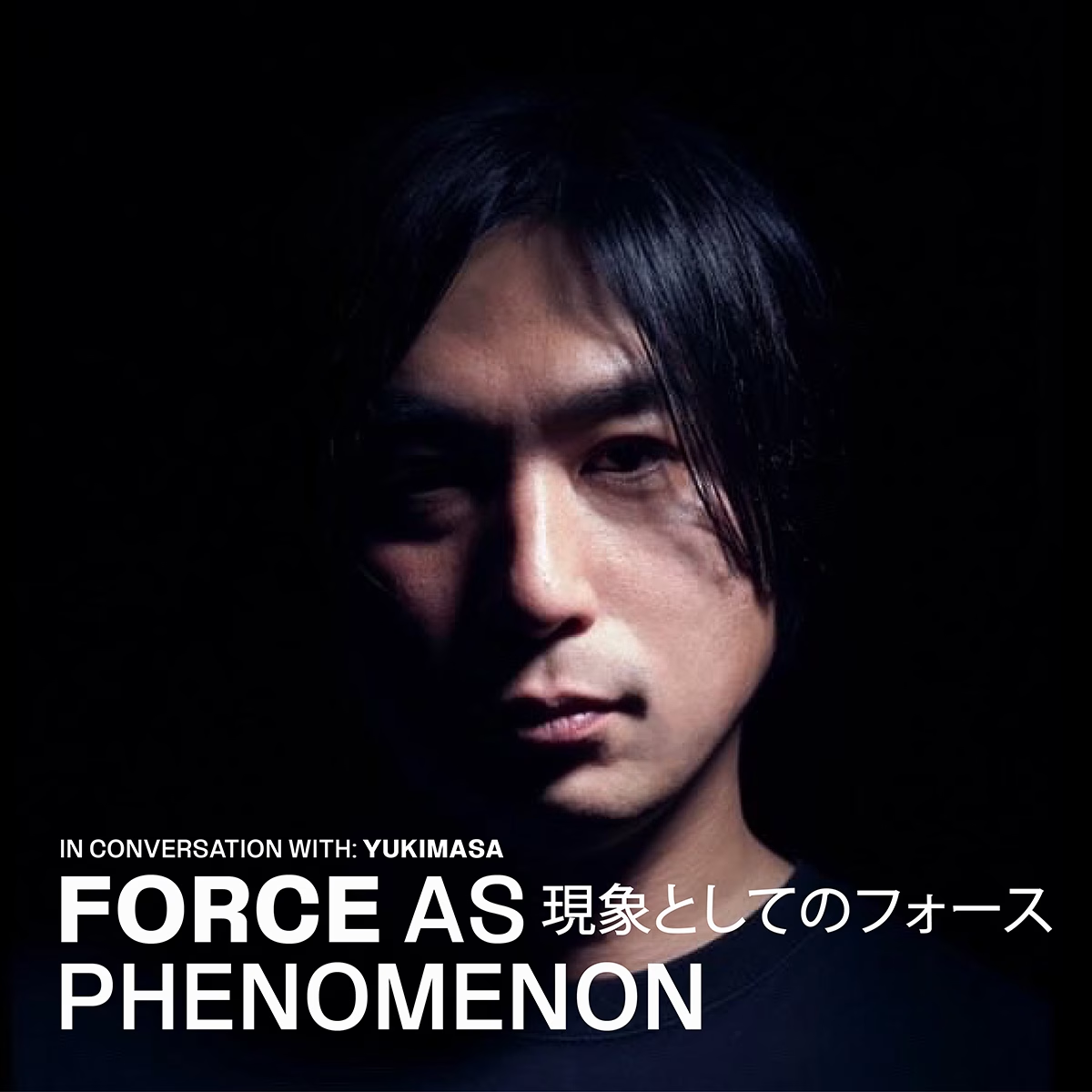
☉ You regularly play in iconic Tokyo clubs like Womb and Vent. What’s the first thing that comes to mind when you think of each of these places?
“Since each party has a different concept depending on the proposal, I don’t associate fixed characteristics with the clubs themselves. I believe both are places where you can authentically experience Tokyo’s electronic music scene.”
☉ You’ve just wrapped up an European tour that took you to OHM in Berlin (for the Astral Industries showcase), Espacio Perpendicular in Madrid for Hummø, and finally to Porto’s legendary Gare. What impressions did these three gigs leave on you?
“All three venues on this tour were amazing, and I was honored to be invited by equally incredible teams. I always have a great time with friends in Berlin, and my first experiences in Spain and Portugal left me with unforgettable memories.“
☉ What elements do Japanese and European parties have in common? And where do you see the biggest differences?
“One thing both European and Japanese parties have in common is that they provide a space where people can fully immerse themselves in the music. In Europe, I get the impression that people dance with more intensity, whereas in Japan, there’s a slightly stronger emphasis on listening.”
☉ There has always been a strong fascination in Europe with the Japanese techno scene, and it feels like the interest has grown alongside the evolution of contemporary techno. The rise of deep techno, drone techno, and experimental sounds seems to have cast a new spotlight on your scene. Would you agree?
“I believe the cultural and environmental context of a place deeply shapes its musical character. Introspective music resonates strongly with the nature of many people active in Japan. Compared to many European countries, organizing dance music events in Japan can often be more complex. At the same time, I feel that such a demanding environment can sharpen an artist’s sensitivity.”
☉ Your label Paradigma Records, which you co-founded with Drafted in 2019, released a new album by Key Clef in December 2024 — two years after “Sinri Introspective 002”. Was that gap a deliberate choice or just how things played out?
“I don’t set strict schedules for releases on my label. As for Key Clef’s EP, I think it brought a new sense of balance to the label.”
☉ We learnt from your posts that new releases are planned, four years after your last solo EP on Crescent London. Can you give us some hints? Maybe about concepts.
“I spent two years working on an album that’s scheduled for release in June. It features original tracks arranged in a way that creates a cohesive flow, accompanied by remixes from some outstanding artists. Each original track was created with the overall journey of the album in mind and will be presented in the sequence that best conveys that story.”


![In conversation with: Juan Rico [Reeko, Architectural]](https://palpebrae.com/wp-content/uploads/2026/02/interviews-1-300x300.avif)